Before bidding at Japanese motorcycle auctions, check the bike’s frame and steering, match its identification number to its paperwork, and get a shipping quote for its packed size. A low bid can lose its advantage if the bike needs structural work, cannot be registered, or takes more space than you budgeted for.
Key takeaways
- Use the auction report to decide what to inspect. Ask for close-ups and a cold-start video where available.
- Match the frame number to the documents your destination broker expects.
- Get a quote for the bike as packed and allow for transport, repairs and local charges in your bid limit.
How to read a Japanese motorcycle auction report
Ask your exporter for the original condition report, its translation and the auction’s grading guide. Check what the grade covers, whether the mileage is recorded as verified, and whether the engine was started or the bike was ridden. Keep anything the auction could not check on your inspection list.
If a report notes a fall or one side has several marks, ask for photos of the bar end, lever, footpeg, engine cover and exhaust on that side. Ask for a wider photo showing the fork, wheel and handlebar together. Scratches show where to look for damage. They do not establish that the steering is straight.
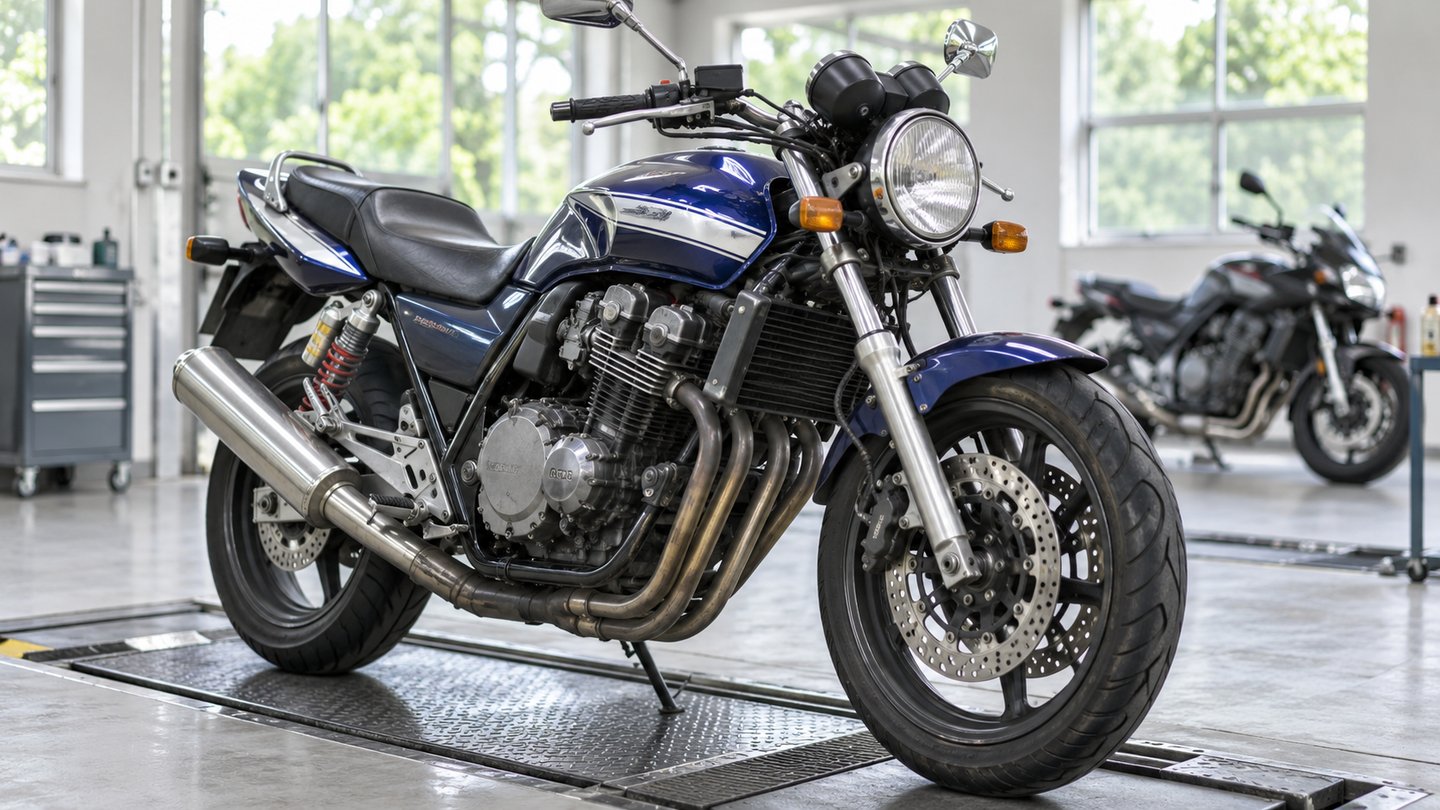
What to inspect before bidding at Japanese motorcycle auctions
A mechanic can use the frame, steering and brake checks in the UK Driver and Vehicle Standards Agency’s motorcycle inspection manual as a technical reference. Its inspection rules apply in Great Britain. Ask for checks suited to the bike and your destination.
| Area | What to ask for | How to use the result |
|---|---|---|
| Frame and steering | Photos of the steering head, steering stops and frame welds. Ask a mechanic to check alignment if the forks or stops show damage. | Hold the bid if the frame is cracked, distorted or repaired and you cannot verify the condition. |
| Engine and electrics | A cold start, idle and restart video where available. Ask about leaks and warning lights. | Treat a starting video as evidence that the engine runs. Get a separate check for a suspect noise or fault. |
| Brakes, tyres and drive | Photos of discs, tyre sidewalls, wheels and chain or belt, as applicable. | Ask your workshop to price replacements before approving the bid. |
| Panels, controls and keys | Close-ups of broken mounts, missing panels, modified controls and the keys supplied. | Check parts availability for the exact model. Ask whether a missing key needs programming. |
Check the frame number and export documents
Ask for a clear photo of the stamped frame number and compare it with the auction record and the available Japanese paperwork. Japan’s Ministry of Land, Infrastructure, Transport and Tourism lists different vehicle forms, including forms for motorcycle classes. Ask the exporter which deregistration or export record, where applicable, it can supply for this bike.
Send the model code, engine capacity, manufacture date if available, and a copy of the proposed vehicle record to your destination broker before buying. Confirm what the broker needs for import and registration, including whether it needs originals or a translation. If the stamped number and paperwork differ, resolve the discrepancy before the auction.
Get a shipping quote for the packed bike
Ask the forwarder whether the carrier accepts a crate, a pallet or another approved arrangement. Request the packed dimensions, gross weight, packing price and unloading charges. If the packer uses raw wood for the crate or supports, ask how it meets applicable ISPM 15 requirements at your destination.
Tell the forwarder how the bike is powered and whether it is damaged. Maersk’s container booking guidance, for example, covers motorcycles and makes acceptance depend on power source and condition. Ask your carrier for written instructions on fuel, batteries and securing the bike. Confirm whether it will accept any loose parts before packing them.
Set the bid limit for each bike in a mixed batch
Use the landed cost guide to list the costs beyond the hammer price. Allocate shared freight by the space each packed bike takes up if your quote is based on volume. Add each bike’s own parts and workshop estimate before working backwards from the local resale price.
In an illustrative example, one crated bike takes up twice the space of another. If the forwarder charges 600 in total by volume, allocate 400 to the larger bike and 200 to the smaller one. A flat split would understate the larger bike’s freight cost by 100. These are example amounts, not freight rates.
For an eligible lot, use Sumotori’s motorcycle sourcing service to request available condition evidence and the Japan-side export and shipping quote. The referenced guidance was checked on 10 November 2026.
Frequently asked questions
Should I bid if the seller says the bike runs but there is no cold-start video?
If the bike fits your stock plan, ask for an inspection. If it is unavailable, budget for diagnosis and repair. Pass if the possible repair cost exceeds the margin you can afford to lose.
This article provides general information. Confirm the bike’s condition, shipping acceptance and import rules with your exporter, carrier and a qualified mechanic or customs specialist, as applicable. This article does not constitute a public offer.