Key takeaways
- Request close-up photos or checks of the specific issues that could affect your purchase.
- Compare unclear mileage with available dated records.
- Agree on the inspection scope, cost and reporting deadline before bidding.
- Skip the lot if an important condition question remains unresolved.
Pre-bid vehicle checks help you clarify a car’s condition before committing to an auction purchase in Japan. If the auction sheet mentions underbody rust, engine noise or interior damage, request photos, video or an inspection to understand the issue and the work it may require.
What to request before bidding
Read the full sheet and translated comments first. Our guide to reading and verifying a Japanese auction sheet explains how to interpret that information.
Then identify what you still need to know. A request such as “please photograph the corrosion around the rear suspension mounting points” gives your auction partner a clearer task than “please check for rust”.
| Concern | What to request | What you need to establish |
|---|---|---|
| Underbody rust or corrosion | Clear photos of the affected area, surrounding metal and relevant structural parts; an inspection if the extent is unclear. | Where the corrosion is, how far it extends and whether it requires specialist assessment. |
| Previous body repairs | Close-ups of repaired panels, panel gaps and adjacent areas; available repair details. | Which parts were affected and whether the repair needs further investigation. |
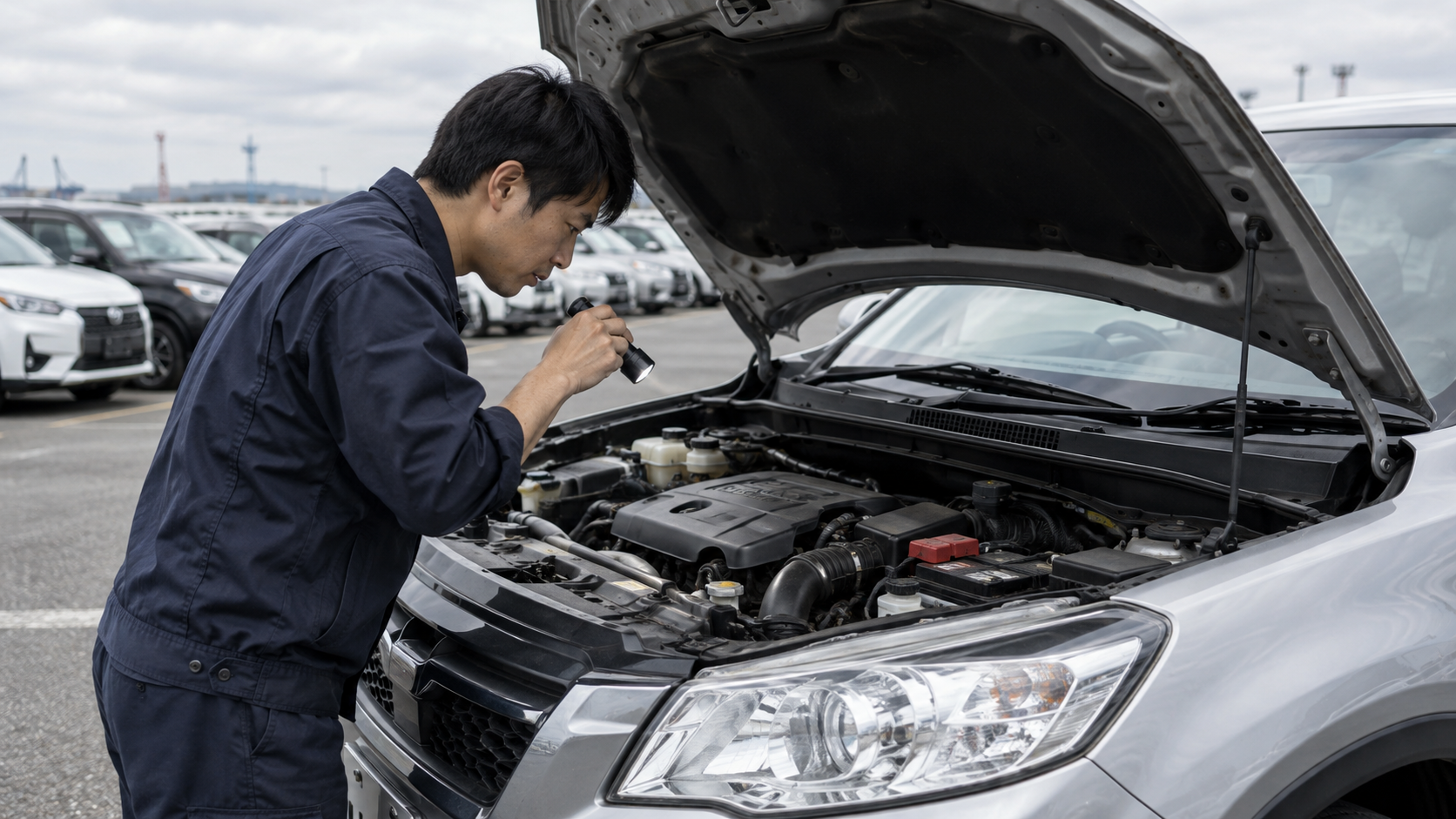
| Engine noise or starting problems | A starting and idling video with clear sound; confirmation of whether the engine was already warm. | Whether the engine starts, idles steadily or makes unusual noises during the check, and whether further diagnosis is needed. |
| Warning lights | Photos of the dashboard with the ignition on and the engine running; available diagnostic findings. | Which warnings remain illuminated and whether their cause has been identified. |
| Unclear mileage | An odometer photo and available dated service or inspection records. | Whether recorded mileage increases consistently over time and whether an odometer replacement is documented. |
| Interior damage or odours | Close-ups of affected seats, trim and carpets; a direct check for smoke or other strong odours. | Which areas need cleaning or replacement and whether strong odours are present. Odours require an in-person check. |
| Equipment faults | A check of the specific feature you need, such as air conditioning, electric doors, windows or cameras. | Whether it operated during the check and what remains untested. |
Ask for findings, not just reassurance. “The left rear window did not open” is more useful than “the electrics need attention”.
A starting and idling video can reveal visible symptoms or unusual sounds during the recording. It cannot confirm road performance or rule out intermittent faults. Mileage records can help identify inconsistencies, but they may leave gaps in the car’s history.
Arrange pre-bid vehicle checks in time
Send the request as soon as you shortlist the vehicle. Include the auction venue, sale date, lot number and chassis number, together with the exact questions you want answered.
Before agreeing to an additional inspection, confirm:
- What the inspector can check and what falls outside the inspection.
- What you will receive: photos, video or a written report.
- How much the check costs.
- When you will receive the results.
Ask specifically about access to the underside, a cold start, diagnostics or a road test if any of these matters to your decision. Do not assume they are included.
Ask to receive the findings before approving your bid. If an important check cannot be completed in time, decide whether to skip the lot.
Use the findings to decide whether to bid
Suppose the sheet mentions underbody rust, but the listing photos show only the exterior. Your first request should be clear underside photos, especially around the areas identified in the notes.
If the photos do not clearly show the corrosion, ask for a closer inspection before the auction. If the findings suggest repairs, seek an estimate before setting your bid limit.
You can then make one of three decisions:
- Proceed: the issue is understood and the expected work fits your buying criteria.
- Lower your bid limit: the car still suits your stock, but preparation will cost more.
- Skip the lot: the condition remains unclear or the potential work exceeds what you are prepared to accept.
For the wider purchase budget, use our guide to calculating the landed cost of a used car from Japan.
Discuss the selected lot with SUMOTORI Japan
Use SUMOTORI’s Yokozuna auction platform to shortlist vehicles and review auction information. Send the team the lot details and your specific concerns, then ask which additional checks can be arranged before bidding.
Keep the findings with your purchase records so your dealership’s buying and sales teams work from the same information.
Additional checks depend on the auction venue, vehicle access and time available. Confirm the scope, cost and reporting deadline before approving a bid.