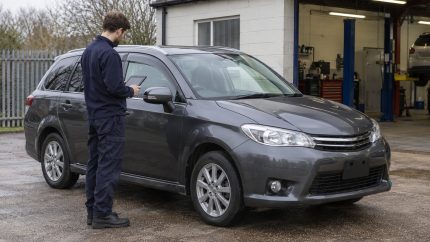
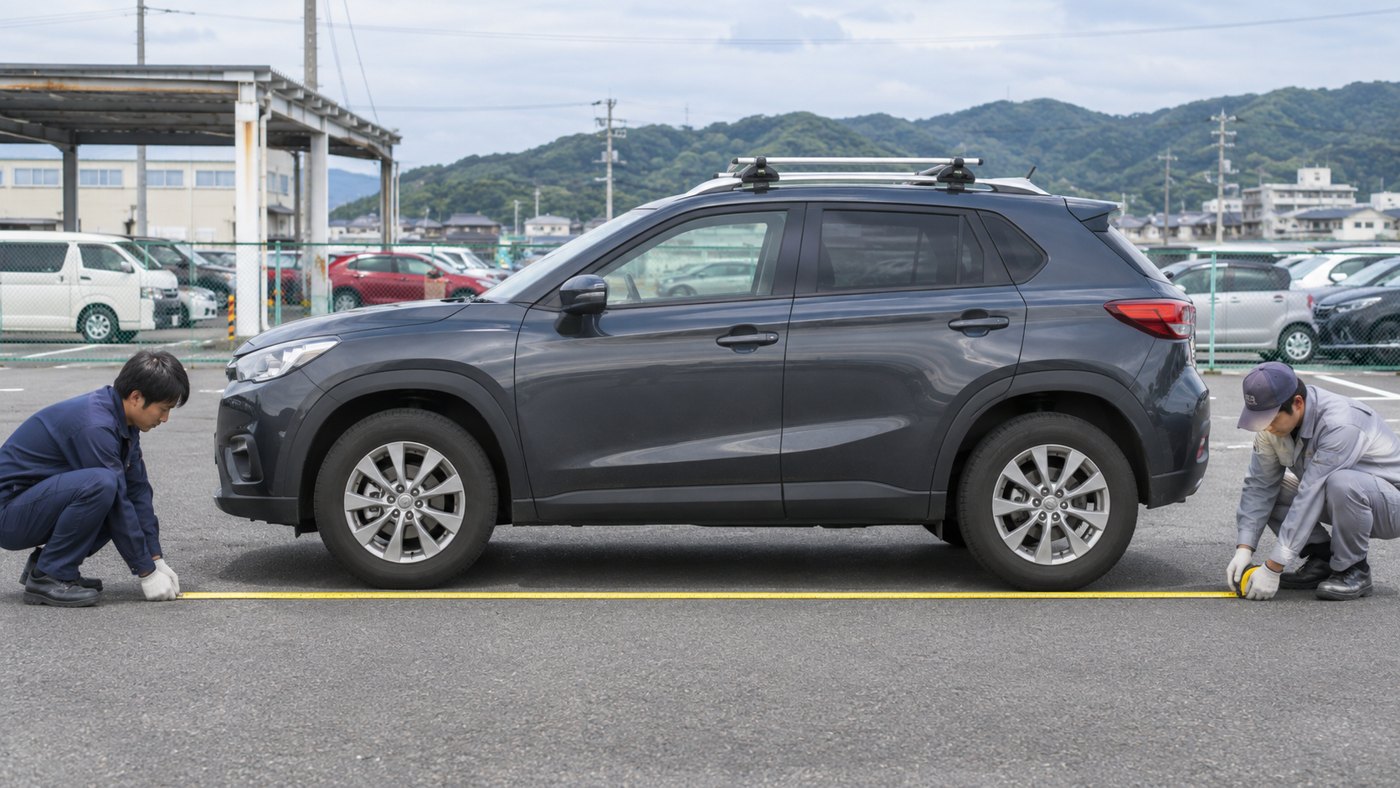
Car shipping dimensions should describe the vehicle in the condition it will be presented for transport, including relevant fitted accessories. Use the actual length, width and height to calculate volume, then check how the carrier uses those figures in its quote. A catalogue measurement or a cubic-metre total alone does not confirm the final freight charge or acceptance for loading.
Key takeaways
- Calculate cubic metres from measurements in metres, and keep the original dimensions beside the result.
- Check fitted equipment and the carrier’s measurement position before relying on a standard model figure.
- Compare the quoted billing basis and resolve any remeasurement difference before treating the shipping budget as final.
What car shipping dimensions describe
A shipping enquiry may ask for length, width, height, weight and quantity separately. For example, Höegh Autoliners’ enquiry form distinguishes floor area from cubic volume. It calculates area as length × width × quantity and volume as length × width × height × quantity.
These figures answer different questions. Cubic metres describe a rectangular volume based on the outside dimensions. Square metres describe the corresponding footprint. Weight describes mass. Keep each field and unit separate rather than entering a weight figure into a volume field.
For an ordinary vehicle, record the chassis or VIN and exact variant beside the measurements. Body length, roof height and fitted equipment can differ within one model name. A high-roof or modified vehicle needs its own entry instead of inheriting a convenient standard figure.
Calculate cubic metres without mixing units
For measurements in metres, multiply length × width × height. Consider a fictional car measuring 4.60 m long, 1.80 m wide and 1.55 m high. Its calculated volume is 4.60 × 1.80 × 1.55 = 12.834 m³.
CBM and m³ both mean cubic metres. If the source dimensions are centimetres, divide each by 100 before multiplying. The same example is 460 cm × 180 cm × 155 cm ÷ 1,000,000 = 12.834 m³. For millimetres, divide the multiplied result by 1,000,000,000.
The footprint in this example is 4.60 × 1.80 = 8.28 m². It is not 12.834 m²: that latter number belongs to volume. Label spreadsheet columns with the units and preserve the input dimensions so someone else can check the result.
Keep calculation precision until the carrier’s rounding rule is known. Do not round down each dimension to make the result fit a budget. A quoted volume should remain traceable to the measured figures and the stated commercial method.
Measure the configuration the carrier will receive
Wallenius Wilhelmsen’s measurement instructions call for true metric dimensions in the onboard stow position and include attachments or accessories. They address items such as foldable mirrors and projecting equipment. Apply the booked carrier’s current instructions, rather than assuming one measurement convention covers every shipment.
Before requesting a quote, compare the standard vehicle record with current photographs. Look for a roof rack, roof box, rear-mounted carrier, tow attachment or other addition that changes an outer dimension. Send photographs that show the projection clearly, not only a close-up of its fixing.
If something will be folded, pulled in or removed, agree that configuration with the exporter and carrier. Record who will do the work and when. Do not subtract an accessory from the booking dimensions while leaving it fitted for delivery to the port.
Also decide what happens to anything removed. It cannot simply be placed inside the car on the assumption that loose items are accepted. Obtain the carrier’s instructions for the actual item and its carriage. The measurement calculation does not decide cargo acceptance.
Example: a roof fitting changes the volume
Continue the fictional example. Suppose the vehicle is presented with a fitting that increases the overall height from 1.55 m to 1.75 m, while length and width stay unchanged.
| Illustrative configuration | Calculation | Volume |
|---|---|---|
| Without the additional height | 4.60 × 1.80 × 1.55 | 12.834 m³ |
| With the fitting as presented | 4.60 × 1.80 × 1.75 | 14.490 m³ |
| Difference | 4.60 × 1.80 × 0.20 | 1.656 m³ |
If a fictional quote charged USD 70 per cubic metre with no minimum or rounding adjustment, the extra volume would add USD 115.92 to that volume-based line. The dimensions and rate are teaching assumptions, not a real vehicle specification, Sumotori tariff or market freight rate.
An actual quotation may use a different basis. Ask whether the relevant charge is per unit, per cubic metre, subject to a minimum or affected by another condition. Then apply the confirmed method. A volume calculation cannot show the whole invoice unless all other applicable charges are included.
Compare quotes using the same measurement record
Send each provider the same vehicle details and configuration. Keep the loading port, destination, shipping method and scope aligned as well. Otherwise a price difference could reflect different dimensions or services rather than a lower rate.
- Match the chassis or VIN, variant and quantity to the cars being quoted.
- Record length, width, height, weight and the unit used for each.
- State any fittings that remain attached and identify the agreed stow position.
- Ask for the billing unit, rounding, minimum and any measurement-related conditions.
- Identify which charges are included and when the quote expires.
For a mixed batch, calculate each configuration separately and add the results. Do not use one average set of dimensions for dissimilar cars. If two cars genuinely share the same measurements, multiply that vehicle’s calculated volume by two. Retain a separate identity record for each.
Resolve a remeasurement difference with evidence
Wallenius Wilhelmsen’s product measurement guide, linked from its ocean-support page, explains that it verifies booking dimensions at the port. It also describes requesting a joint measurement when the customer disagrees with the finding.
If new dimensions arrive, compare all three inputs before discussing price. Check for a wrong unit, another roof version, an attached fitting or a different measurement position. Request the measurement record and photographs showing the relevant points. Keep the original record so the cause of the change remains visible.
Send any unresolved discrepancy to the booking contact promptly. Ask how it affects the accepted booking and quoted charges, then obtain the revised record. Do not assume a small difference has no effect, or promise a particular additional fee before the carrier confirms it.
Frequently asked questions
Does a cubic-metre calculation prove that the car fits in a container?
No. Container loading also needs suitable door clearance, vehicle access, securing space and a loading plan for the actual cars. Give the loading team the individual dimensions; do not divide container volume by vehicle volume to decide how many cars will fit.
For the broader method choice, see RoRo versus container shipping. Start a destination-specific discussion through Sumotori’s country directory, using the same vehicle measurement file.
Carrier sources checked on 26 November 2026. They explain the cited carriers’ measurement practices; the terms for your booked shipment determine the applicable procedure.
This is general information for business buyers and is not a public offer, freight quotation or loading approval. Confirm the actual vehicle dimensions and transport configuration with your exporter and carrier, and consult a qualified logistics or loading specialist about the specific shipment.