Key takeaways
- Overseas dealers usually buy cars from Japanese auctions through a Japan-based exporter or auction agent.
- Viewing listings online is not the same as direct auction membership.
- The auction price is only one part of the final landed cost.
- Auction sourcing can be combined with ready-for-export stock.
Viewing Japanese auction listings online is not the same as holding direct auction membership; overseas dealers normally participate through a Japanese member company that has verified access to the auction network.
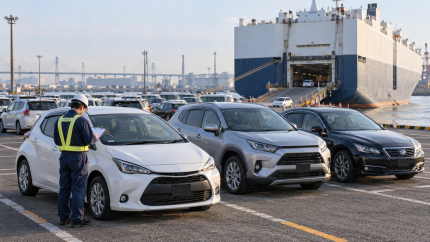
Japanese car auctions are wholesale marketplaces where professional automotive businesses buy and sell used vehicles. Their listings include passenger cars, vans, trucks, motorcycles, construction equipment and agricultural machinery.
Overseas dealers and vehicle importers can search listings and submit bids online. The official auction participant is normally an eligible company registered in Japan with access to dealer-only auction systems.
A foreign dealer can select vehicles and submit bids remotely, but the transaction is normally completed through a Japan-based exporter or auction agent. The partner handles bidding, settlement, vehicle collection and export operations in Japan.
For the complete process from vehicle selection to customs clearance, see our guide on how to import cars from Japan.
How Japanese car auctions work
Japanese vehicle auctions are used by dealers, exporters, leasing companies, rental businesses and corporate fleet operators.
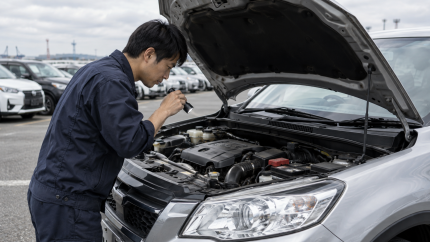
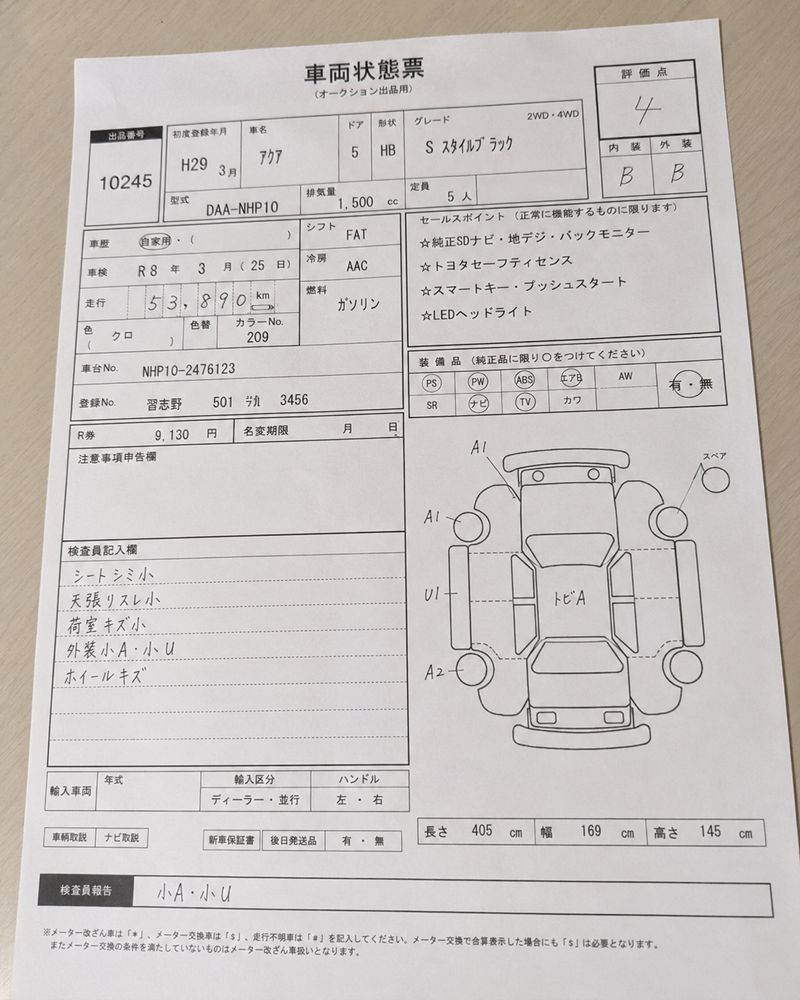
Before a vehicle is listed, an auction inspector checks its condition. The lot information usually includes:
- make, model and chassis number;
- first registration year;
- mileage;
- overall auction grade;
- interior grade;
- photographs;
- a body damage diagram;
- repair history where identified;
- equipment and specifications;
- inspector comments.
The level of detail and format of inspection sheets and damage diagrams vary between auction houses and do not replace a full technical inspection.
Registered members review the vehicle information and set their bidding limits. During the auction, the price rises in real time, and the vehicle is sold to the highest accepted bidder.
Some sellers set a reserve price. If bidding does not reach the required amount, the vehicle may remain unsold or move to post-auction negotiation.
Types of Japanese car auctions
Japanese vehicle auctions can be grouped by the organisations that operate them, the vehicles they specialise in and the bidding format they use. Some auction networks hold live sales at physical venues while also allowing eligible members to bid remotely through their own systems.
Overseas dealers do not usually participate as direct auction members. They normally work through a Japan-based exporter or auction partner with verified access to the relevant network.
| Auction type | Examples | How bidding works | Access for overseas dealers |
|---|---|---|---|
| Manufacturer- and dealer-affiliated auctions | TAA, Honda Auto Auction, Nissan Auto Auction and other manufacturer-linked networks | Vehicles are offered through scheduled auction sessions. Eligible members can bid at auction venues or remotely through the operator’s system, depending on the network. | Overseas dealers normally participate through a Japan-based exporter or auction partner with access to the network. |
| Independent auction networks | USS, JU, CAA and similar networks | Live auction sessions are held at physical venues, with remote bidding available to eligible members through online systems or dedicated terminals. | Direct access is limited to approved members. Overseas dealers usually bid through a Japan-based exporter or auction partner. |
| Tender and fleet auctions | ORIX, LUM and other fleet or lease vehicle sales | Members submit bids during a fixed tender period rather than competing in a live auction. The vehicle is sold according to the organiser’s tender rules. | Overseas buyers access these sales through an exporter or partner authorised to participate. |
| Motorcycle auctions | JBA and specialist motorcycle lanes operated by larger auction groups | Motorcycles are sold through dedicated auction sessions or specialist lanes, with competitive bidding by approved members. | Overseas dealers participate through a Japan-based exporter or auction partner with motorcycle auction access. |
| Construction and specialised machinery auctions | Arai Construction Machinery and other machinery-focused auction venues | Construction, agricultural and industrial equipment is sold through scheduled specialist auctions, with on-site or remote bidding depending on the operator. | Overseas buyers work through an exporter or auction partner with access to the relevant machinery auction. |
Major Japanese car auction networks
Japan has a large network of national and regional vehicle auctions. Overseas dealers will often see listings from several major operators, each with its own strengths and inventory profile.
1. USS
USS is the largest used vehicle auction operator in Japan. Its network includes more than 19 auction sites and tens of thousands of member companies, according to recent public information.The system supports on-site bidding, remote participation through dedicated terminals and internet access.
USS offers a broad range of passenger cars, vans and commercial vehicles. Registered members may inspect a vehicle at the auction site or request a preliminary condition check through a representative.
2. Toyota Auto Auction
Toyota Auto Auction, or TAA, is one of Japan’s oldest vehicle auction networks. Its first sites opened in Tokyo, Nagoya and Osaka in 1967.
TAA sells Toyota vehicles as well as vehicles from other manufacturers. Listings may come from dealer networks, trade-ins and other professional sellers. The network can be useful for buyers looking for vehicles sourced through established dealer channels.
Toyota history of used-vehicle auctions
3. Arai Auto Auction
Arai is known for its wide selection of specialised vehicles and equipment. In addition to passenger cars, its auctions include motorcycles, trucks, construction machinery and agricultural equipment.
According to the company, more than 410,000 vehicles and items of equipment pass through its auction sites and online system each year.
Official Arai auction information
4. Other Japanese auction networks
Importers may also see listings from CAA, JU, Honda Auto Auction, JAA and other national or regional auction systems.
Each network has its own schedule, locations and inventory mix. The most suitable source depends on the vehicle category, model, condition, location and total purchase and transport cost.
For regular sourcing, it is usually more efficient to use one platform that combines listings from several auction networks rather than search each Japan car auction website separately.
How overseas dealers get access to Japanese car auctions
Japanese auto auctions are closed professional marketplaces. An overseas company does not become a direct member simply by registering on an English-language website.
Auction houses set their own membership requirements. For example, a company applying for USS membership must be registered in Japan, employ Japanese-speaking staff and hold a secondhand goods dealer licence issued at least one year before the application. USS also reviews the applicant’s corporate documents and business premises.
For this reason, foreign dealers, resellers and vehicle importers usually work through a Japan-based exporter or auction agent.
Overseas dealers cannot usually remove the Japan-based auction participant from the process. They can, however, avoid a long chain of intermediaries by working with one exporter that manages bidding, settlement, documentation and shipping in Japan.
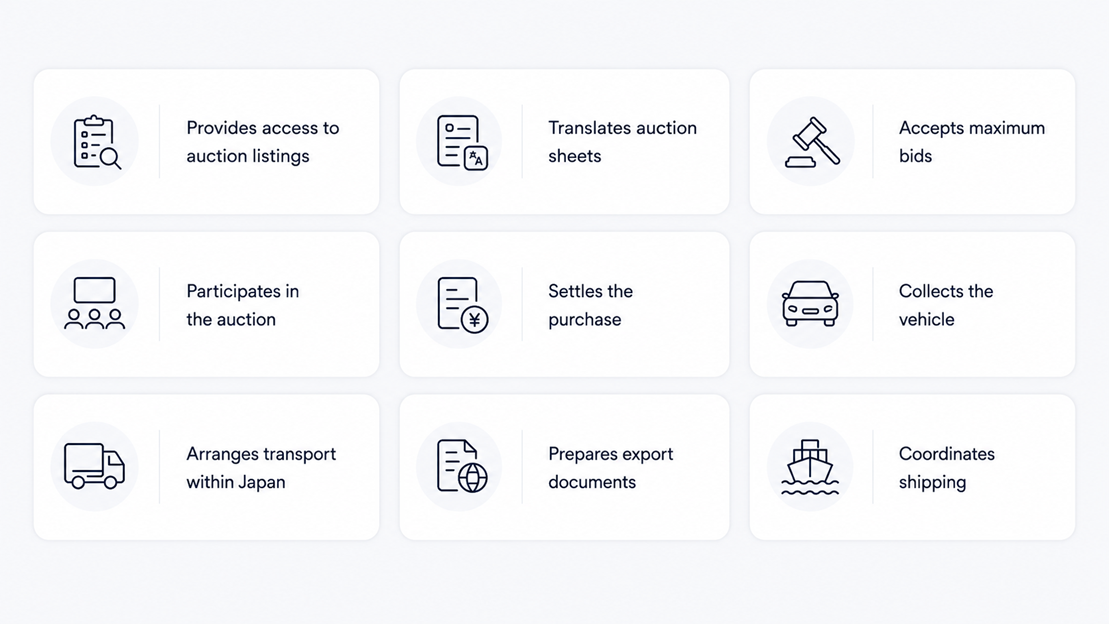
Through the Sumotori Japan auction platform, automotive dealers can search Japanese auction vehicles, review lot information, request translations and manage bids.
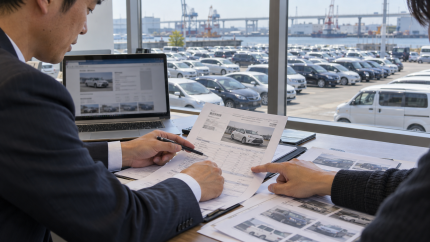
Japanese car auction access should include more than listings. Dealers also need original auction sheets, translation, historical sales data, bid management, settlement and export support.
How to verify a Japanese vehicle exporter
A website with thousands of listings does not by itself prove that the operator is an established participant in the Japanese automotive market. Before transferring money or submitting bids, importers should check several points.
1. Legal registration and presence in Japan
The exporter should have a registered Japanese company, a physical address, corporate contact details, a company bank account and staff responsible for purchasing and export operations.
SUMOTORI Japan Co., Ltd.: corporate number 8010001199872, JASTPRO export licence P002AL200000, Chamber of Commerce registration 2201000333 and JUMVEA membership number 709.
Sumotori Japan company profile
2. Verified auction access
The importer should ask which auction systems the exporter works with, whether it receives original auction sheets, whether it can place bids in real time, whether pre-auction checks are available and who settles the purchase after a successful bid.
These questions help distinguish a direct auction partner from a website that passes orders through several intermediaries.
3. Membership in an industry association
JUMVEA, the Japan Used Motor Vehicle Exporters Association, provides another way to verify a Japanese exporter.
SUMOTORI Japan has been listed in the official JUMVEA directory since 2019. Its profile identifies the company as an auction agent, exporter and used cars portal.
- verify the company in an independent industry directory;
- confirm its stated address and business activity;
- compare the listed contact information;
- reduce the risk of working with an anonymous online intermediary.
JUMVEA membership does not guarantee the condition of an individual vehicle or the financial result of a transaction. It allows overseas buyers to verify the company as an identifiable participant in Japan’s used vehicle export industry.
View SUMOTORI Japan in the JUMVEA directory
4. Japan-side export operations
Auction access is only one part of the purchasing process. A capable exporter should also be able to arrange vehicle collection, domestic transport, storage, additional inspection where available, deregistration, export certificates, vessel booking and shipping documents.
With Sumotori Japan, vehicle search, bidding, payment control, documentation and shipment tracking are connected through one B2B workflow. Yokozuna supports English-language search, auction sheet translation, bid groups, balance control and shipment-stage tracking.
How to buy a vehicle from a Japanese auction
The auction purchasing process usually includes eight stages. Import procedures after the vehicle arrives depend on the destination country and are covered separately in our guide to importing cars from Japan.
| Stage | What the dealer does | What the Japan-based partner does | Key points to check |
|---|---|---|---|
| 1. Open a dealer account | Provides company details, representative documents, business address, destination country and port, expected purchasing volume and required vehicle categories | Reviews the application, opens the account and confirms bidding conditions | Deposit amount, refund terms, account limits and accepted payment methods |
| 2. Define vehicle requirements | Sets the target model, year, mileage, acceptable grade, engine and transmission type, damage limits, target landed cost and expected resale margin | Helps align the search with the dealer’s budget and sourcing strategy | Import eligibility, local demand and realistic resale price |
| 3. Search for suitable vehicles | Uses the online platform to filter listings and create a shortlist | Provides access to listings and supports vehicle search | Compare several suitable lots instead of focusing on one vehicle |
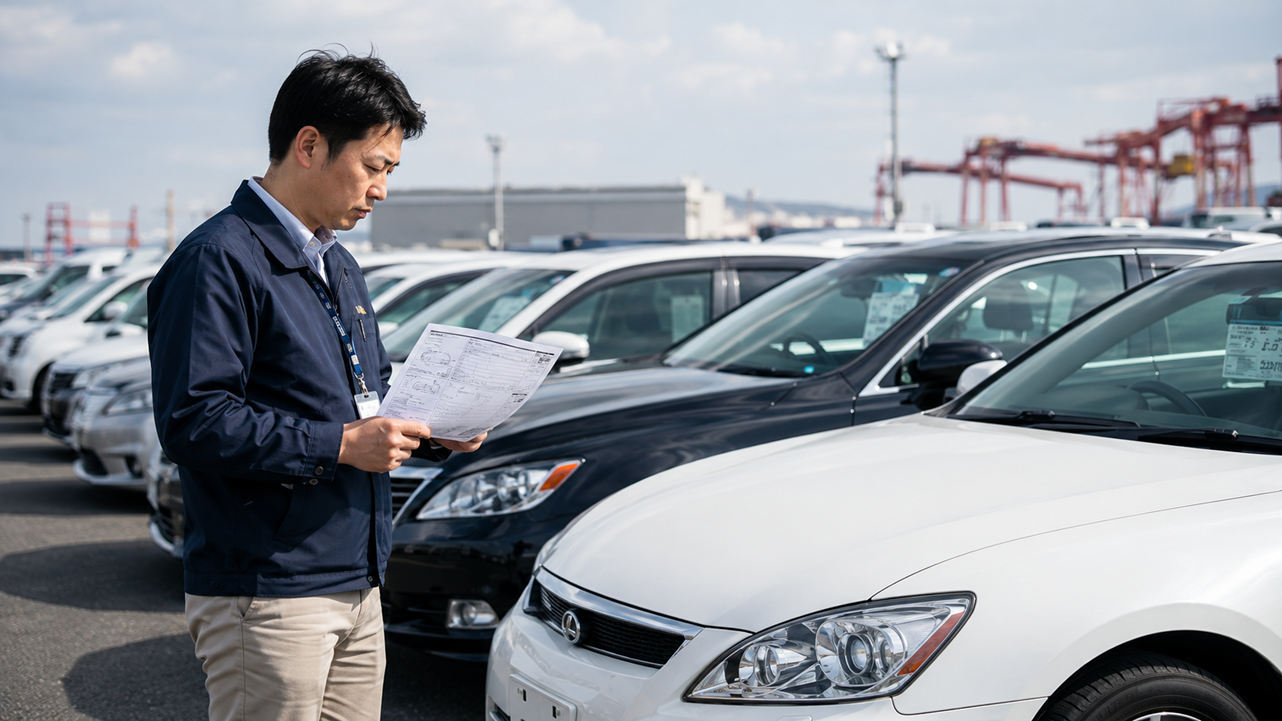
| 4. Review the auction sheet | Checks the overall grade, interior grade, damage diagram, repair history, photographs, production date and mileage status | Translates inspector comments and may arrange additional photos or a preliminary inspection | The auction grade does not replace a full condition review |
| 5. Calculate the maximum bid | Calculates the highest acceptable purchase price based on landed cost and resale margin | Provides auction fees, exporter charges and estimated Japan-side logistics costs | Include transport, storage, documents, freight, insurance, customs charges, repairs and exchange-rate reserve |
| 6. Submit the bid | Sends the maximum bid through the platform or to an account manager | Participates in the auction and bids within the approved limit | Confirm the lot number, bid limit, available balance and whether post-auction negotiation is possible |
| 7. Pay for the vehicle | Pays the invoice within the agreed timeframe | Settles the purchase with the auction house and arranges vehicle collection | Payment deadline, currency, bank details and full list of charges |
| 8. Prepare the vehicle for export | Confirms the destination port and provides any route-specific requirements | Arranges vehicle collection, deregistration, export documents, inland transport and RoRo or container booking | Shipping method, Japan-side document package and estimated departure schedule |
Before dealers bid on Japanese cars, they should review the auction sheet and calculate the full landed cost, not the auction price alone.
For example, if the vehicle must cost no more than ¥1,500,000 after shipping and related charges, and non-purchase costs are estimated at ¥400,000, the auction bid should remain below ¥1,100,000. The calculation should also include a margin for exchange-rate changes and unexpected costs.
After shipment, the importer uses the supplied documents for customs clearance and vehicle registration in the destination country. Duties, inspections and registration rules vary by market. These stages are explained in our step-by-step guide on how to import a car from Japan.
Auction vehicles or cars in stock
Auction sourcing and stock purchasing support different business needs.
| Auction vehicles | Cars in stock |
|---|---|
| Wide choice across multiple auction systems | Limited to currently available units |
| Price is determined through bidding | Price is known in advance |
| Specific models and specifications can be targeted | Purchase can be confirmed faster |
| Requires auction sheet review | Vehicle information has already been collected |
| Purchase depends on the bid result | No competitive bidding is required |
| Suitable for regular sourcing programmes | Suitable for urgent inventory needs |
Many dealers use both models. Auctions provide a wider choice, while ready-for-export stock can fill immediate inventory gaps.
Dealers can review cars in stock and ready for export separately or combine stock vehicles with auction purchases as part of one supply programme.
How Sumotori Japan supports vehicle importers
Through Yokozuna, dealers can search auction listings, review and translate auction sheets, analyse available historical sales data, manage bids, monitor payments and follow documentation and shipment stages.
After purchase, Sumotori Japan handles settlement, vehicle collection, export documents, domestic logistics and shipping coordination in Japan. This allows dealers, resellers and importers to manage sourcing and export through one verifiable business partner.
Frequently asked questions
Can I see Japanese auction results before placing a bid?
Many Japan car auction platforms provide historical sales data for similar vehicles. These results help dealers compare recent prices and set a realistic maximum bid, but they do not guarantee the final price of the next lot.
How early do vehicles appear on Japanese auction websites?
Listings may become available only a few days or hours before the sale. Dealers using Japanese auto auctions online should check new lots regularly and arrange auction sheet translation before the bidding deadline.
Can several dealers bid on the same vehicle?
Yes. Japan vehicle auctions are competitive wholesale marketplaces. Several registered members may bid on one lot, and the vehicle is sold when the highest accepted bid meets the seller’s conditions.
What happens if a vehicle does not sell during the auction?
An unsold vehicle may be offered through post-auction negotiation or listed again at another sale. A Japan auto auction broker can confirm whether negotiation is available and submit an offer on behalf of the dealer.
Can dealers buy several vehicles from different auctions in one shipment?
Yes. Dealers can buy auction vehicles in Japan from different auction networks and consolidate them where the route and shipping method allow. Storage, domestic transport and container planning should be calculated before bidding.
What happens after a vehicle is shipped from Japan?
After shipment, the importer handles customs clearance, local taxes, compliance checks and vehicle registration in the destination country. The exact process depends on national regulations, the vehicle category and the shipping method.
Read the complete guide on how to import cars from Japan.
This guide reflects Sumotori Japan’s practical experience and publicly available information from customs and transport authorities. It does not replace professional legal, tax or customs advice for any specific country or transaction and does not constitute a public offer.