Key takeaways
- Check the import and registration rules in the destination country before selecting a vehicle.
- Dealers can source vehicles from Japanese auctions, ready stock or other professional channels.
- The vehicle price is only one part of the total landed cost.
- A Japan-based exporter handles purchase settlement, deregistration, export documents, domestic transport and shipping coordination.
- Customs clearance, local compliance and registration are completed in the destination country.
Importing cars from Japan requires more than choosing a vehicle and arranging shipping. Dealers must first check local import rules, calculate the full landed cost and work with a reliable Japan-based exporter.
The process includes vehicle sourcing, payment, export preparation, shipping, customs clearance and registration in the destination country. Requirements vary by market and may cover vehicle age, steering position, emissions and other factors. These examples are general; importers should confirm current rules with local authorities or a licensed customs broker before buying.
Why dealers import vehicles from Japan
Japan gives automotive businesses access to a large and frequently updated supply of used vehicles. Dealers can import used cars from Japan through auctions, ready stock and other professional sourcing channels.
- access to many makes, models and specifications;
- auction sheets and condition information for many vehicles;
- several sourcing methods for planned or urgent purchases;
- the ability to build repeat purchasing programmes;
- access to Japanese-market models that may be difficult to find locally.
The business case always depends on the destination market and the importer’s own cost and demand analysis; Japanese pricing alone does not guarantee profitability. A vehicle may be competitively priced in Japan but unsuitable after freight, duties, compliance work and local registration costs are added.
Check the import rules before buying
The first step is not choosing a vehicle. It is confirming what can legally be imported and registered in the destination country.
- vehicle age;
- production date or first registration date;
- left-hand or right-hand drive;
- emissions standard;
- engine type and capacity;
- safety equipment;
- accident or repair history;
- modifications;
- roadworthiness requirements;
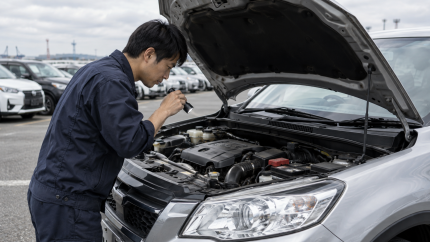
- pre-shipment inspection;
- local certification;
- permitted ports of entry.
This list is illustrative. Specific import and registration rules differ by country and may change, so dealers should confirm the latest requirements with the relevant authorities or a local customs and compliance specialist.
Some markets allow only vehicles within a specified age range. Others restrict right-hand-drive cars, damaged vehicles or models that do not meet local emissions and safety standards.
Requirements may also differ for passenger cars, commercial vehicles, trucks, motorcycles, construction machinery, electric vehicles and hybrids. Dealers should confirm the current rules with the relevant authorities or a local customs and compliance specialist before buying.
Sumotori Japan works with dealers in different destination markets and coordinates vehicle sourcing, Japan-side documentation, domestic logistics and shipping preparation. Sumotori Japan can share operational experience, but final responsibility for compliance with destination‑country vehicle categories and licensing rules remains with the importer.
These checks should be completed before bidding or confirming a stock purchase. A vehicle that cannot be imported or registered has little commercial value, even if its purchase price is low.
Choose how to source vehicles from Japan
| Sourcing method | How it works | Main advantage | Best suited for |
|---|---|---|---|
| Japanese vehicle auctions | The dealer searches upcoming lots and submits a maximum bid through a Japan-based auction partner | Wide choice across many sellers and auction networks | Planned sourcing, specific model searches and regular purchasing |
| Cars in stock | The dealer selects a vehicle already purchased and available from the exporter | Confirmed availability and a known purchase price | Faster inventory replenishment and first-time buyers |
Auction sourcing offers the broadest choice, but the final purchase depends on the bid result. Stock vehicles can usually be confirmed faster because the vehicle and price are already available.
Dealers that need auction access can use the Sumotori Japan auction platform – Yokozuna. For auction types, bidding and inspection sheets, see the guide to Japanese car auctions.
How to choose a Japanese car exporter
A reliable exporter should do more than provide vehicle listings and prices. The company must be properly established in Japan, have verified access to sourcing channels and be able to manage the purchase, documentation and shipment of vehicles for overseas buyers.
When evaluating a Japanese car exporter, dealers should check the following:
- Registered company in Japan. The exporter should operate through a Japanese legal entity with a verifiable company name, registration number, physical address, contact details and corporate bank account. Payments should be made to the company named in the agreement or invoice.
- Compliance with Japanese export requirements. The company should hold the registrations, permits and operational approvals required for the services it provides. It should also be able to demonstrate that vehicles are purchased, deregistered and exported in accordance with Japanese law and customs procedures.
- Verified access to vehicle sourcing channels. Ask whether the exporter has direct auction memberships, corporate auction accounts or established agreements with authorised auction members. Reliable access should include auction sheets, condition reports, bidding rights and historical sales data where available.
- Membership in recognised industry organisations. Membership in organisations such as JUMVEA is not a legal requirement, but it provides an additional verification point. Overseas buyers can check whether the exporter appears in the organisation’s official member list and is subject to its membership rules.
- Clear fees, payment terms and contracts. The exporter should provide written terms covering purchase commission, auction fees, domestic transport, storage, inspection, documentation, port handling, freight, refund conditions and cancellation rules. Responsibilities for shipping documents, insurance and delivery should also be clearly defined.
- Ability to manage export operations. A professional exporter should be able to arrange payment settlement, vehicle collection, deregistration, export documentation, transport within Japan, port delivery, vessel booking and preparation of the documents required for shipment.
- Independent verification. Dealers should confirm the company’s registration details, bank information, industry memberships and business address before making payment. Published company information, trade references and previous export records can provide additional confirmation.
These checks reduce the risk of working with an unreliable exporter, but they do not replace independent legal, tax or customs advice. Importers should also review the contract and destination-country requirements with their own advisers and work with a licensed customs broker where the vehicle will be cleared and registered.
For company records, membership checks and payment verification, see our guide to verifying Japanese car exporters before sending payment.
Calculate the full landed cost
The landed cost is the total amount the dealer spends before the vehicle is ready for sale or registration in the destination country.
The calculation should be made in the currency used in the dealer’s market. Costs quoted in Japanese yen should be converted using a planning exchange rate before the vehicle is purchased.
Use this formula:
Maximum purchase budget = expected local resale price − target margin − shipping − import charges − compliance costs − Japan-side fees − risk reserve
For example, a UK dealer may expect to sell a vehicle for £12,000. Before deciding how much can be spent in Japan, the dealer deducts:
- the required profit margin;
- ocean freight and insurance;
- UK port and customs charges;
- duty and VAT;
- inspection, compliance and registration costs;
- exporter fees and domestic transport in Japan;
- a reserve for exchange-rate changes and unexpected expenses.
The remaining amount is the maximum budget for the vehicle and all Japan-side costs.
Japanese auction prices and exporter invoices are often quoted in yen. The dealer should convert these amounts into the local sales currency using a conservative exchange rate. It is safer to include an additional exchange-rate reserve rather than calculate the purchase using the most favourable rate available on that day.
Before bidding or confirming a stock vehicle, the dealer should request:
- the vehicle price in yen;
- exporter and auction fees;
- domestic transport and storage costs in Japan;
- export document charges;
- estimated freight and insurance;
- destination port charges;
- estimated duties and taxes;
- expected compliance and registration costs.
The quotation should clearly show which amounts are fixed and which are estimates. The dealer should not submit a bid until the expected resale price still leaves the required margin after all costs are included.
Buying cars from Japan step by step
The complete process can be divided into eight stages.
| Stage | Main action | Who usually handles it |
|---|---|---|
| 1. Check import eligibility | Confirm age, emissions, steering position, inspections and registration rules | Dealer or local customs and compliance specialist |
| 2. Choose an exporter | Verify the company, services, fees, payment details and shipping support | Dealer |
| 3. Define and source the vehicle | Set vehicle requirements and search auctions, ready stock or other sourcing channels. Sumotori Japan uses the Yokozuna platform to centralise vehicle search, selection and sourcing data in one system. | Dealer and exporter |
| 4. Review and purchase the vehicle | Review auction sheets and condition data, compare vehicles, confirm the total purchase cost and place the order. Yokozuna helps automate data processing, document flow and purchase coordination, reducing manual work and delays. | Dealer with exporter support |
| 5. Prepare the vehicle for export | Arrange deregistration, export documents, domestic transport and port delivery | Japan-based exporter |
| 6. Ship the vehicle | Select RoRo or container transport and issue shipping documents | Exporter and shipping line |
| 7. Clear customs | File the import declaration, pay duties and complete inspections | Importer and customs broker |
| 8. Register and deliver | Complete compliance work, registration and inland delivery | Importer and local service providers |
Review and purchase the vehicle
For an auction vehicle, review the auction sheet, inspector comments, damage diagram and available photographs. For a stock vehicle, request the chassis number, specifications, mileage, condition information, current location and estimated Japan-side charges.
Before sending funds, confirm the company name, bank account holder, vehicle or lot reference, chassis number where available, purchase price, all confirmed fees, payment deadline, and refund or cancellation rules. Do not send payment to an unrelated personal account.
The quotation should also state the trade term. FOB normally covers the vehicle and agreed Japan-side costs up to shipment, while CFR or C&F includes ocean freight and CIF also includes insurance. The exact inclusions and responsibilities must be recorded before payment.
How to export a car from Japan
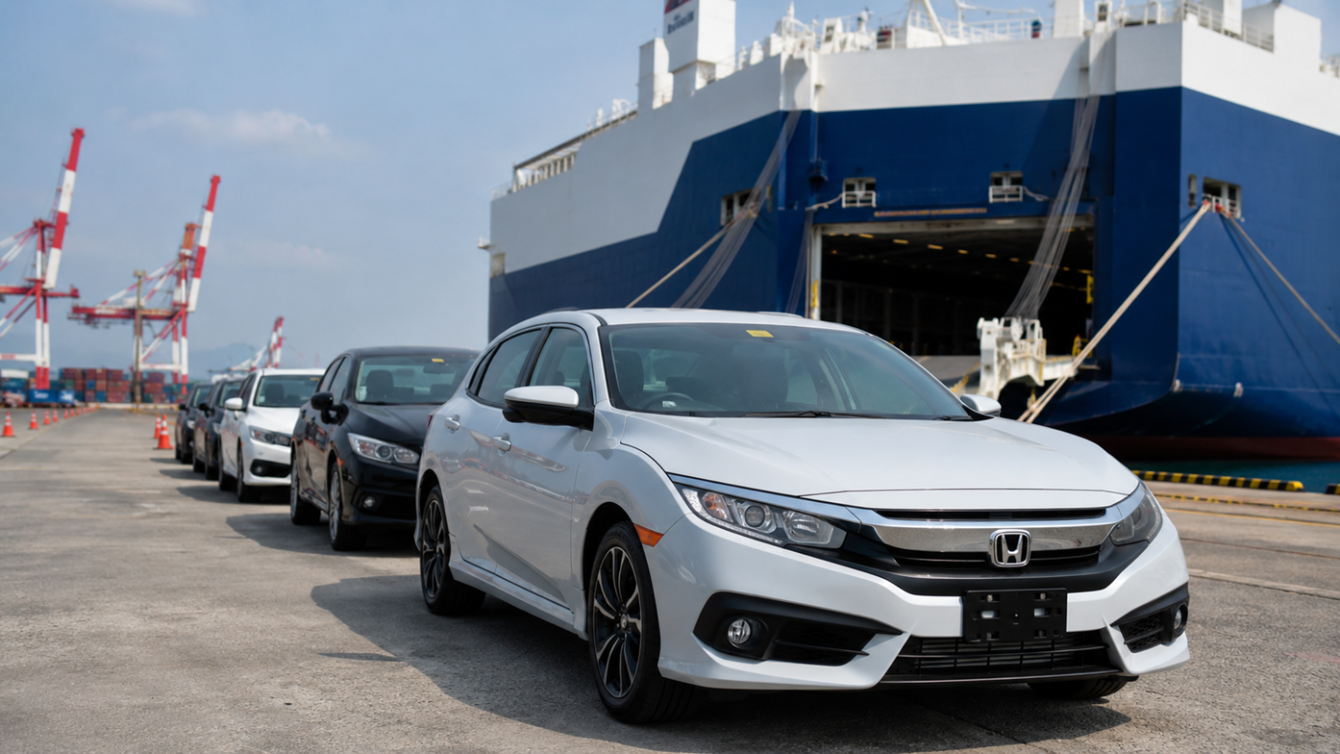
After purchase, the Japan-based exporter prepares the vehicle for legal export. The exact procedure depends on the vehicle’s registration status and the shipping arrangement.
- registration deletion or export notification;
- export certificate preparation;
- vehicle collection and inland transport;
- delivery to the port or another approved customs area;
- customs export declaration;
- RoRo or container booking;
- shipping document preparation.
The exporter or its appointed agents typically handle these Japan‑side steps. The exact split of responsibilities should be confirmed in the service agreement.
Japan Customs explains that used vehicles must follow the applicable deregistration or planned-export procedure and that the relevant certificate must be presented during export clearance. See the official Customs procedures for exporting used vehicles. Operational steps in this guide follow Japan Customs’ public information on exporting used vehicles; importers should still check for updates directly with Japan Customs or a licensed customs broker.
Documents used when exporting a car from Japan
- Commercial invoice. Identifies the seller, buyer, vehicle and transaction value. Customs authorities may use it to assess the declared value.
- Export certificate. Confirms that the vehicle has been deregistered in Japan for export and provides registration data required by destination-country authorities. A translation may be required.
- Bill of lading. Contains information about the shipper, consignee, vessel, loading port, destination port and cargo.
- Export declaration or permit. Japan-side customs procedures require an export declaration. The exporter or customs broker normally handles this process.
- Packing list. May be required for container shipments, consolidated cargo or shipments containing declared parts and additional items.
- Inspection or compliance documents. Some countries require a pre-export inspection, roadworthiness certificate, emissions documentation or other route-specific certificates.
- Certificate of origin. May be required for certain customs procedures or trade-agreement benefits. The importer should confirm this before shipment.
Actual document requirements may differ by route, cargo type and destination‑country regulations. A customs broker should confirm which documents are mandatory for each shipment.
The dealer should review the required document list before buying. Missing or incorrect data can delay customs clearance and create storage charges at the destination port.
RoRo or container shipping
| RoRo shipping | Container shipping |
|---|---|
| The vehicle is driven onto and off the vessel | The vehicle is loaded and secured inside a container |
| Usually suitable for running vehicles | Suitable for running or non-running vehicles, subject to loading conditions |
| Simpler loading process | More planning and loading work required |
| Availability depends on route and destination port | Can be used for consolidated vehicle shipments |
| Personal items are usually restricted | Parts may be shipped where permitted and properly declared |
| Sea transit may be faster, but the vehicle can wait longer in Japan for an available sailing and loading slot | Sea transit may take longer, but container loading and departure can sometimes be arranged sooner |
| Freight may be calculated by vehicle dimensions | Cost depends on container type, loading and route |
Rules on personal items and parts depend not only on the shipping line, but also on customs and safety regulations in the destination country. Importers should confirm allowed cargo contents before loading.
The best option depends on vehicle size, condition, route, schedule and port infrastructure.
Customs clearance in the destination country
After arrival, the importer may need to submit an import declaration, present the invoice, export certificate and bill of lading, pay duties and taxes, complete inspections or modifications, obtain insurance, register the vehicle and arrange delivery from the port.
The Japanese exporter prepares Japan‑side documents and coordinates shipping under the agreed trade terms, but this does not replace local customs, tax or legal advice. Importers remain responsible for compliance with destination‑country rules.
The Japanese exporter prepares the Japan-side documents, but the importer remains responsible for understanding destination-country rules unless another agreement is in place.
Customs duties, inspections, compliance requirements and registration procedures differ by country.
Sumotori Japan strongly recommends working with a licensed customs broker in the destination country to avoid delays, unexpected charges and compliance risks. A local customs broker should confirm required documents, tariff classification, customs valuation, duties and taxes, inspection requirements, port procedures and registration steps before the vehicle is shipped. Waiting until arrival can lead to delays and storage charges.
How Sumotori Japan supports vehicle importers
Through Sumotori Japan and the Yokozuna platform, dealers can source auction and stock vehicles, review vehicle data, manage purchases and track Japan-side documentation and shipping.
Sumotori Japan coordinates settlement, vehicle collection, deregistration, domestic transport, export documents and shipping preparation in Japan. Dealers can start with one controlled purchase and expand after confirming costs, timing, documentation and local demand. A first controlled shipment helps dealers understand real‑world costs, transit times and documentation quality before increasing volume.
Frequently asked questions
How long does it take to import a car from Japan?
The timeline depends on sourcing, payment, vehicle location, document preparation, vessel availability, sea transit and customs clearance. An in-stock vehicle may move to export preparation sooner than a vehicle that has not yet been purchased at auction.
Can a new dealer import only one vehicle?
Yes, subject to the exporter’s account and payment terms. A first shipment can be used to check the full process, costs, document quality and local demand before increasing volume.
Can auction and stock vehicles be combined in one shipment?
They may be combined where timing, vehicle location, storage terms, route and loading method allow. The exporter should confirm the consolidation plan before purchase.
Can several cars be shipped in one container?
Yes, where vehicle dimensions, loading rules, route and container capacity allow. The loading company should prepare a plan and confirm how the vehicles will be secured.
Is marine insurance required?
Requirements depend on the trade term, shipping method and buyer’s risk policy. Dealers should confirm what the carrier covers and whether separate marine cargo insurance is needed before departure.
What happens if the vehicle fails a local inspection?
The importer may need to complete repairs, modifications or additional testing before registration. Requirements and available remedies depend on the destination country, so compliance should be checked before purchase.
This guide reflects Sumotori Japan’s practical experience and publicly available information from customs and transport authorities. It does not replace professional legal, tax or customs advice for any specific country or transaction and does not constitute a public offer.