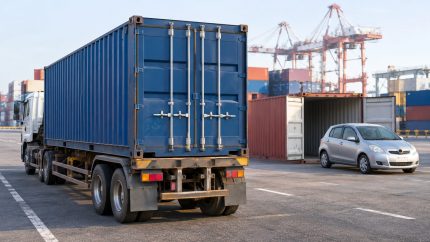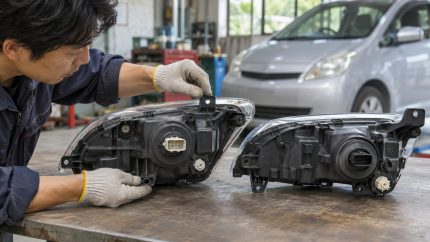
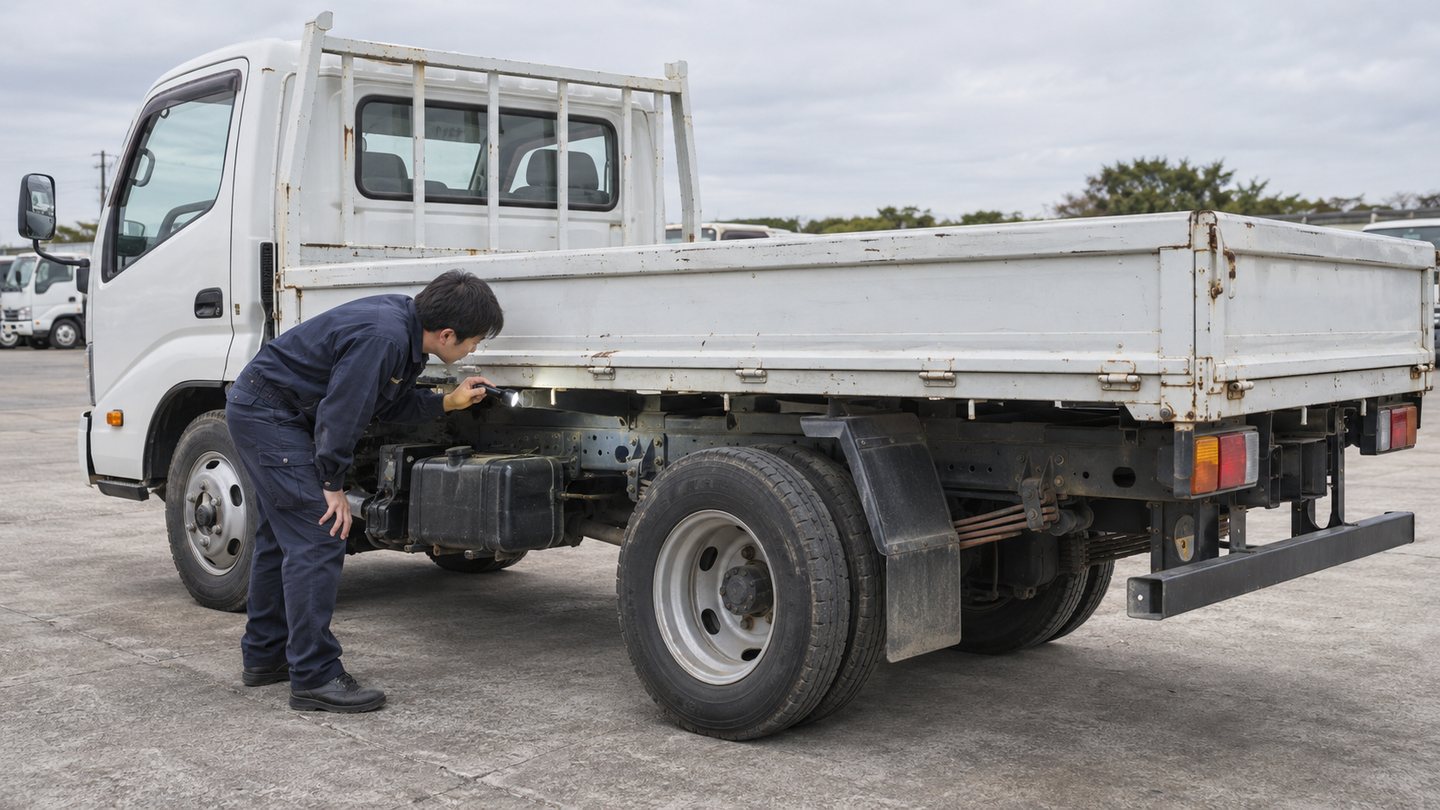
A used truck inspection checklist should answer two questions before you bid in Japan: can this truck do the buyer’s job, and what will it cost to prepare? Confirm usable load capacity and body dimensions first. Then request evidence of chassis condition, mechanical condition and the operation of any fitted equipment.
Key takeaways
- Check the truck against its intended load, body dimensions and destination requirements before judging the price.
- Inspect the chassis and fitted equipment separately; a running engine does not prove that a crane or refrigeration unit works.
- Record missing checks and repair costs before approving a bid. Leave unresolved structural or capacity questions out of your purchase list.
Start the used truck inspection checklist with the job
Write down the cargo, normal load weight, delivery route and loading method. For a box truck, record the largest item and required door opening. For a crane truck, record the load weight and distance from the truck at which it must be lifted.
Send the chassis number, model code, first registration date and available specification documents to your destination broker or approval specialist. Ask whether that exact configuration can be imported, registered and used for the intended work. Include engine and emissions details, axle layout and any body conversion. A passenger-car rule may not cover a commercial truck.
Keep this check separate from general auction-sheet reading. Our pre-bid vehicle checks guide covers photo requests, mileage records and inspection arrangements that also apply here.
Check capacity and measurements before condition
Ask for clear images of the vehicle identification and weight plates, together with the relevant registration or specification records. Separate gross vehicle weight from payload: gross weight includes the truck and what it carries. GOV.UK explains these weight terms; the limits accepted in your destination still need local confirmation.
- Record the stated payload, gross weight and axle limits, including the units and source of each figure.
- Request internal bed or box length, width and height, plus door opening and loading height.
- Record overall length, width and height for transport planning. Include cranes, racks and other projections.
- Compare the current body and fitted equipment with the documents. Ask about later additions or changes.
Worked example, using invented figures: assume the destination accepts a gross limit of 7,500 kg. The truck in its intended working configuration weighs 4,700 kg, including the driver, fuel, tools and installed equipment. That leaves 2,800 kg for cargo before checking individual axle loads and any lower applicable limit.
If a later tail-lift installation adds 250 kg, the same calculation leaves 2,550 kg. Do not subtract that equipment twice if it was already included in the measured weight. A truck needed for 3,000 kg loads would fail this initial check.
Load placement also matters. The UK’s DVSA guidance on overloading recommends checking individual axle weights. Use your destination’s applicable gross and axle limits when assessing the planned load.
Request evidence for each truck system
Give your auction partner the following questions with the lot number and sale date. Ask them to mark every item as checked, not checked or requiring specialist diagnosis. A blank field should not be treated as a pass.
| Area | Evidence to request | How to use the finding |
|---|---|---|
| Frame and body mounts | Photos along both frame rails, crossmembers, spring mounts and body mounting points. Close-ups of corrosion, cracks, welds or reinforcement. | Ask a qualified truck inspector to assess suspected structural damage. Paint or a distant underside photo cannot establish remaining metal thickness. |
| Engine and cooling | Starting video with sound; confirmation of cold or warm start; visible leaks, warning lights and available maintenance records. | Price diagnosis of persistent warnings, smoke or leaks. An idle video leaves loaded performance untested. |
| Gearbox and driveline | Available findings on gear engagement, clutch operation, driveline noise and oil leaks; whether a road test was permitted. | Record the test limits. Stationary engagement does not establish shifting behaviour under load. |
| Suspension, steering and brakes | Photos or findings on springs, bushes, air bags where fitted, steering components, brake condition and air leaks. | Obtain a repair estimate for identified defects. Uneven stance or damaged springs needs investigation; it does not prove past overloading. |
| Tyres and wheels | Size and load-rating markings, tread and sidewall photos, plus condition of inner tyres on twin-wheel axles. | Check suitability with a local tyre supplier and budget for the full set that needs replacement. |
| Mileage and operating hours | Odometer and hour-meter photos, meter labels, dated records and any documented replacements. | Identify which meter measures engine time and which measures separate equipment. Low mileage alone leaves stationary working time unknown. |
Inspect the body and equipment as a separate purchase
Identify the body maker, model and serial number. Send these details to a service provider in the destination country before bidding. Ask whether parts, technical information and inspection services are available for that exact unit.
- Tipper: request findings on the subframe, hinges, locking points, hydraulic cylinder and leaks. Any operating check must follow the manufacturer’s procedure with suitable access and trained personnel.
- Crane truck: request the load chart, equipment plate, inspection records and findings on stabilisers, controls and hydraulic leaks. Compare rated capacity at the required reach, rather than relying on the largest capacity shown.
- Refrigerated truck: request the refrigeration-unit model, hours, service records and a recorded temperature check. Note starting temperature, ambient conditions and elapsed time. One temperature photo cannot show cooling performance.
- Box truck or tail lift: check floor damage, water entry, door seals, lift identification and rated capacity. Ask what functions were tested and whether the test used a load.
A short demonstration is a limited condition check. For example, the UK HSE describes a thorough examination of lifting equipment as a detailed assessment by a competent person with a written report. That is a UK framework, not a worldwide import rule. Ask your destination specialist which documents and examinations the equipment needs there.
Turn the findings into a repair budget and bid decision
Request an itemised estimate for the defects that affect sale or use: parts, labour, diagnosis and any required equipment examination. Include the cost of moving the truck to a workshop if it cannot travel under its own power. Keep these amounts separate from freight and import charges.
For example, if a truck already needs four tyres and a hydraulic leak repair, send the tyre specifications and equipment serial number with the estimate request. A general allowance for “minor repairs” gives you no way to check whether the budget is enough.
Set your bid only after adding these costs to the wider landed-cost calculation. A known repair can be priced. Unresolved frame damage, unclear legal payload or an unidentified essential attachment can prevent a reliable buying decision.
Send a final approval sheet before the auction
Keep a single dated record for the person authorising the bid. Include the required job, confirmed specification, findings, untested items, repair estimates and maximum bid. Attach the supporting photos and reports so another team member can see why you approved the truck.
SUMOTORI’s used-truck sourcing service supports dealers with Japan-side sourcing, purchase information, export documents and shipping coordination. Send the selected lot and specific inspection questions to establish which additional checks can be arranged before the sale.
Frequently asked questions
Can I rely on an auction claim after discovering a fault?
Check the specific auction’s claim rules before bidding: eligible defects, exclusions, reporting deadline and evidence required. Ask who submits a claim and how the deadline is measured. Do not use a possible later claim as a substitute for an essential pre-bid check.
This article provides general buying information and is not a mechanical inspection or confirmation of import eligibility. Confirm the available checks and purchase terms with your exporter, and capacity, equipment safety and local requirements with qualified specialists. This information does not constitute a public offer.