Marine cargo insurance for used cars should be checked against the vehicle’s condition and the complete journey you are paying for. Before accepting a quote, identify the insured party, where cover starts and ends, which damage is excluded and how a claim must be reported. A premium alone gives you too little information to compare offers.
This matters when a car changes hands several times: at the Japanese yard, during delivery to port, on the vessel and after discharge. The company moving the car and the company insuring it may have different responsibilities.
Key takeaways
- Check the wording for used vehicles, including cosmetic damage, mechanical problems and any condition-report requirement.
- Match the insured journey to your actual collection and delivery points.
- Prepare condition evidence before departure and give the receiving team the claims contact before arrival.
Carrier liability and cargo insurance answer different questions
Carrier liability concerns what the carrier is responsible for under its transport contract and applicable law. It should not be treated as a promise to reimburse the full vehicle value. Wallenius Wilhelmsen explains that its liability is limited and recommends arranging marine transport insurance before transport begins.
For your purchase file, keep two separate records: the transport contract and the insurance documents. If an invoice says “insurance included”, request the certificate or other evidence of cover and the applicable policy wording. Establish who can make a claim and who receives any settlement.
TT Club describes a cargo policy as a combination of the wording, schedule, applicable Institute Cargo Clauses and correctly issued certificates. A short certificate therefore needs to be read with the other documents it refers to. TT Club cargo insurance documentation.
Start with the journey, then read the policy
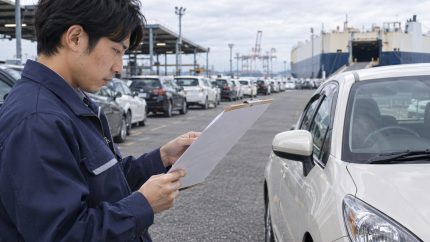
Write down the physical route in plain language. For example: collection from a Japanese storage yard, road transport to the export port, ocean carriage, arrival-terminal handling and delivery to the dealership. Next to each stage, record whether the quoted insurance includes it.
| Journey stage | Point to establish |
|---|---|
| Japanese yard to loading port | The location and event at which cover attaches |
| Storage before loading | Whether the intended storage and any time limits are included |
| Ocean carriage | The accepted route, shipping method and any transfer between vessels |
| Discharge and arrival storage | When cover ends and how waiting at destination is treated |
| Transport to the dealer | Whether this leg is included or needs separate arrangements |
An unanswered line shows where further confirmation is needed. It does not prove that the stage is uninsured. Send the completed route to the person arranging cover so they can identify the relevant wording.
Pay particular attention to who takes the car after discharge. If your local transporter collects it later, establish the insurance position during that interval before booking collection. Update the insurer or intermediary if the route or delivery point changes.
“All risks” still needs an exclusions check
Maersk’s explanation of Institute Cargo Clauses (A) makes clear that “all risks” does not mean every possible loss. Its examples include delay and loss of market unless specifically included. A late car and a physically damaged car raise different questions.
Read the section for used goods and vehicles before relying on a general description of cover. In the proposal, find the treatment of existing defects, scratches and dents, rust, mechanical or electrical problems, and movement under the car’s own power. Mark any wording you cannot apply confidently to your purchase.
As a concrete example, Maersk’s published contractual terms contain used-goods exclusions and vehicle-specific requirements, including provisions about condition reports and the period of cover. These are examples of terms to examine, not conditions that automatically apply to every exporter’s insurance.
Give the insurer the actual facts: a used vehicle, its age and condition, known damage, fuel or battery type, shipping method and route. If you are buying a damaged or non-running car, disclose that before cover is arranged. Keep the written response with the policy.
Compare the deductible and insured value
The deductible, also called an excess, is the amount you retain under the policy’s stated arrangement. Establish whether it applies per vehicle, per claim or per event. Also check any minimum amount or percentage calculation.
Here is a simplified arithmetic example, not an insurance quotation or settlement prediction. Assume an otherwise covered repair costs $1,200 and the policy has a flat $300 deductible per claim. Subtracting the deductible leaves $900 before considering any other policy terms. If the deductible were $1,000, the same calculation would leave $200.
That difference can matter more than a small premium saving. Compare both offers using the same vehicle value, route and damage scenario.
Check how the insured value was calculated and which costs it includes. Record the currency and ask how a repairable loss and a total loss would be valued. For a batch, identify both the value allocated to each car and any limit applying to the whole shipment. Do not assume the resale price is the insured value.
Build the condition record before the car moves
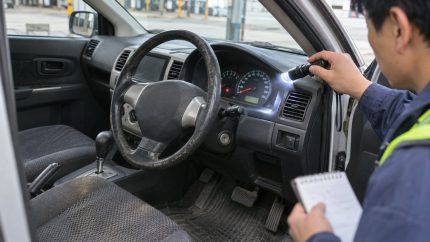
The evidence should let someone identify the car and compare the same area before and after transport. As a practical photo plan, request clear views of:
- The vehicle and its chassis identification.
- All sides, bumpers, roof and visible glass.
- Wheels and accessible lower body areas.
- The interior and any accessories included in the shipment.
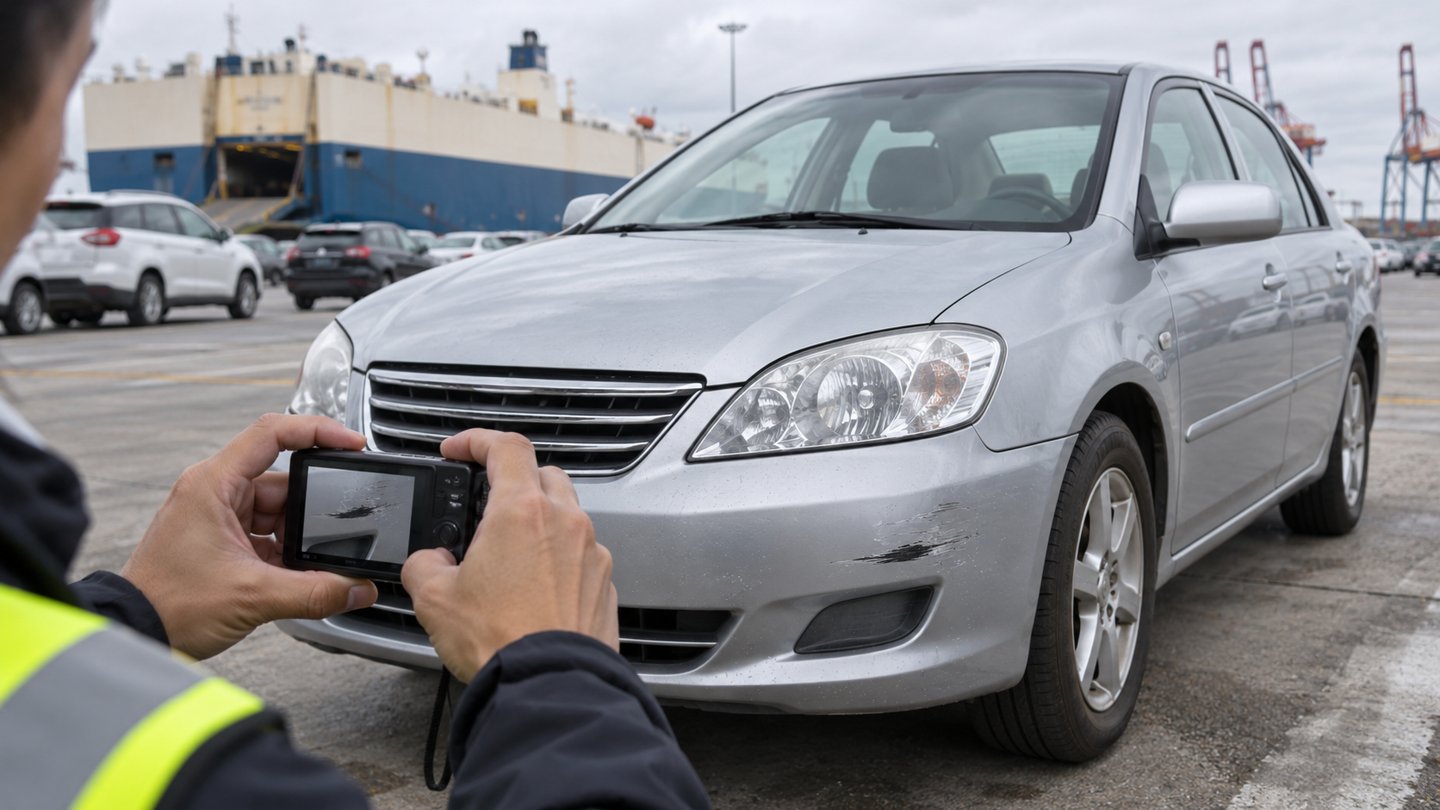
- Each existing defect, with a wider view showing its location.
Keep the original files, dates and inspection reference. Record who took the photographs and where. Follow any survey or report requirements in the policy; a set of informal photos may not satisfy a prescribed condition report.
For container shipments, add available loading and securing photographs to the same vehicle file. For RoRo, keep the handover and receiving records available. The purpose is to make a later comparison possible, without assuming in advance who caused any damage.
Give the receiving team a plan for damage
Do not wait until the final repair invoice is available to find out how notice must be given. Maersk’s claims guidance calls for immediate notification and supporting evidence such as shipment records, invoices, delivery records and photographs. Use the actual deadlines and contacts for your policy and transport contract.
- Inspect the accessible vehicle condition at collection, where permitted and safe.
- Record visible discrepancies on the receiving documentation and take clear photographs.
- Notify the insurer or claims handler and relevant transport party as instructed.
- Ask whether a survey is needed before repairs, dismantling or disposal of damaged parts.
- Keep repair estimates, invoices and all correspondence under the chassis and shipment references.
If urgent action is needed to prevent further damage or make the vehicle safe, explain the situation promptly and retain evidence of what was done. Follow the claims handler’s directions rather than assuming every expense will be recoverable.
For shipping-document checks, use the bill of lading guide. To compare how cars are handled in each transport method, see RoRo versus container shipping.
Frequently asked questions
Does marine cargo insurance replace a mechanical inspection?
No. Insurance terms and a pre-purchase inspection serve different purposes. An inspection helps you assess the vehicle you are buying. Have the policy’s treatment of mechanical or electrical problems explained before relying on transport cover for a fault found after arrival.
Does changing the discharge port affect the insurance?
Send the proposed route change to the insurer or intermediary before agreeing it. Obtain confirmation of any effect on cover, premium or conditions and retain the updated documents.
This article provides general information about reviewing marine cargo insurance for used vehicles. Source examples were checked on 20 November 2026. Cover, exclusions, valuation and claims procedures depend on the actual policy. Confirm suitability with a qualified insurance professional and coordinate shipment details with your exporter. This article does not constitute a public offer.